

Outstanding Thermal Insulation and Energy Efficiency
High-specification, high-density PU (polyurethane) foam technology seals cold air inside the container, significantly extending dry ice storage time and solid-state life.

DRY ICE BLASTING & PRODUCTION EQUIPMENT MANUFACTURER
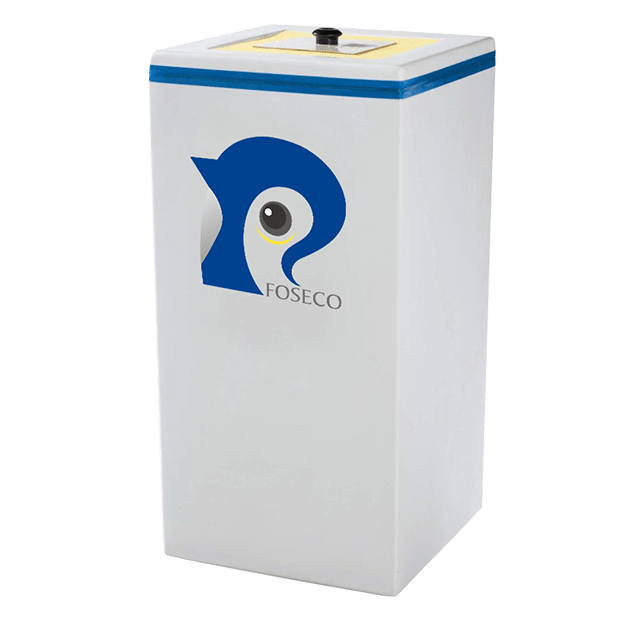
This small dry ice storage container is suitable for laboratories and small-scale storage. It's made of high-quality thermal insulation materials.
Dry ice has a sublimation temperature of -78.5°C and rapidly turns into gas at room temperature. For many businesses involved in dry ice cleaning, food cold chains, biotechnology, and healthcare, watching purchased dry ice gradually evaporate represents a substantial hidden cost. Ordinary plastic insulated containers and coolers cannot withstand such extremely low temperatures. They are prone to embrittlement and cracking and cannot effectively prevent heat transfer.
As a dry ice equipment manufacturing specialist in Taiwan, FOSECO Co., Ltd. has developed high-performance industrial dry ice storage containers specifically to address the challenges of dry ice storage and long-distance transportation. Advanced insulation technology minimizes the natural sublimation rate of dry ice, helping you preserve the value of every kilogram.
Unlike ordinary household or lightweight coolers on the market, FOSECO dry ice storage containers are purpose-built assets designed for ultra-low-temperature environments rated to -80°C. They provide three core advantages:
High-specification, high-density PU (polyurethane) foam technology seals cold air inside the container, significantly extending dry ice storage time and solid-state life.
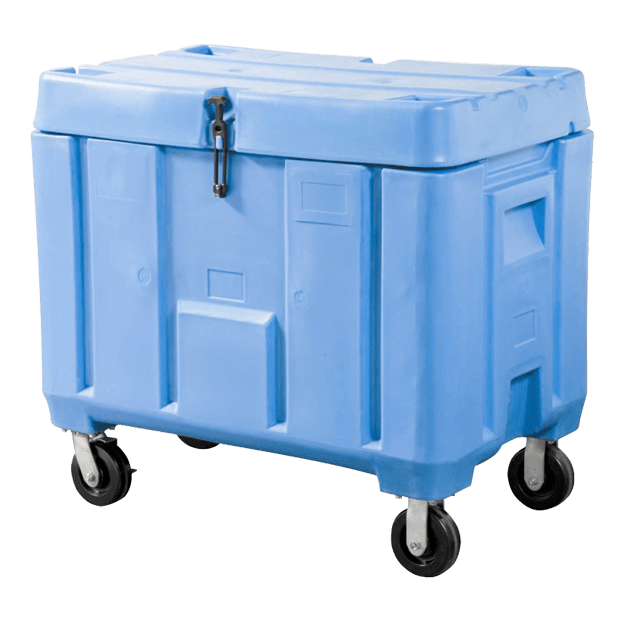
The container is rotationally molded in one piece from food-grade PE (polyethylene). Its seamless construction is impact-resistant, low-temperature-resistant, and resistant to embrittlement, allowing it to withstand forklift handling and high-impact logistics operations.
Designed around the carbon dioxide released by dry ice, the container maintains a highly airtight seal to block external warm air while safely releasing small amounts of pressure to prevent deformation.
FOSECO offers dry ice storage containers in various capacities and specifications to meet diverse requirements ranging from laboratories and food delivery to international ocean freight and bulk industrial storage.
Advantages of FOSECO Industrial Dry Ice Storage Containers
FOSECO storage containers are more than a protective shelter for dry ice. They are a powerful foundation for low-temperature control across a wide range of industries:
Used with FOSECO dry ice machines (MD-1050 / MD-1250), freshly produced dry ice blocks or pellets can be stored immediately, ensuring maximum hardness and cleaning impact when used in dry ice cleaning machines.
Ideal for long-distance, power-free, low-temperature transportation of premium seafood such as bluefin tuna, ice cream, and airline meals, keeping products frozen even when mobile refrigeration is unavailable.
Stores and transports high-value vaccines, biological specimens, stem cells, and clinical trial drugs while maintaining a strictly controlled ultra-low-temperature environment.
Used to store specialty chemicals or provide low-temperature storage and transportation for wafer-processing equipment components.
A: Dry ice continues to sublimate depending on the ambient temperature and how frequently the container is opened. When using a FOSECO industrial dry ice storage container, reducing the frequency of opening and filling unused space with dry newspaper or blankets can keep the daily natural sublimation rate within an extremely low range. Depending on the environment and operating conditions, the rate is typically approximately 4%–8% per 24 hours, delivering significantly better storage performance than an ordinary insulated container.
A: Yes. It is fully compatible with 3mm/16mm dry ice pellets and large 5kg/30kg dry ice blocks. When storing dry ice pellets, using a dedicated dry ice bag or insulated bag is recommended to provide dual-layer insulation and make handling more convenient.
A: When dry ice sublimates, its volume expands approximately 800 times. If an insulated container were completely sealed with no pressure-relief space, excessive internal pressure could cause the container to expand or even rupture. FOSECO containers use highly elastic airtight gaskets to prevent external warm air from entering while allowing small amounts of pressure to be safely released when internal pressure becomes too high, ensuring safe industrial operation.


